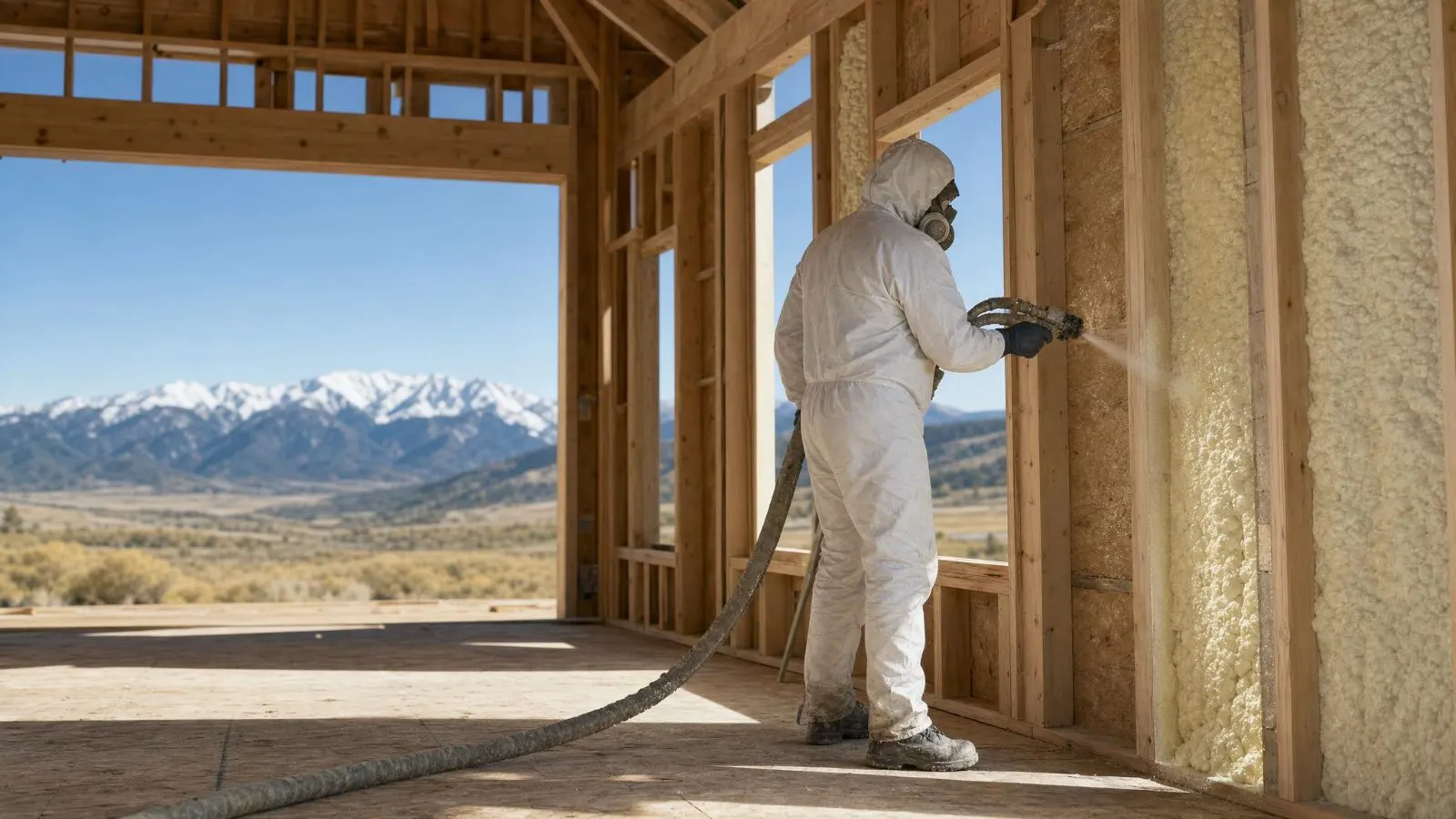
Dense foam for the toughest spots
Closed-Cell Spray Foam Insulation in Westcliffe, CO
High R-value per inch with built-in moisture control. Call anytime for a quote.
Dense foam for the toughest spots
High R-value per inch with built-in moisture control. Call anytime for a quote.
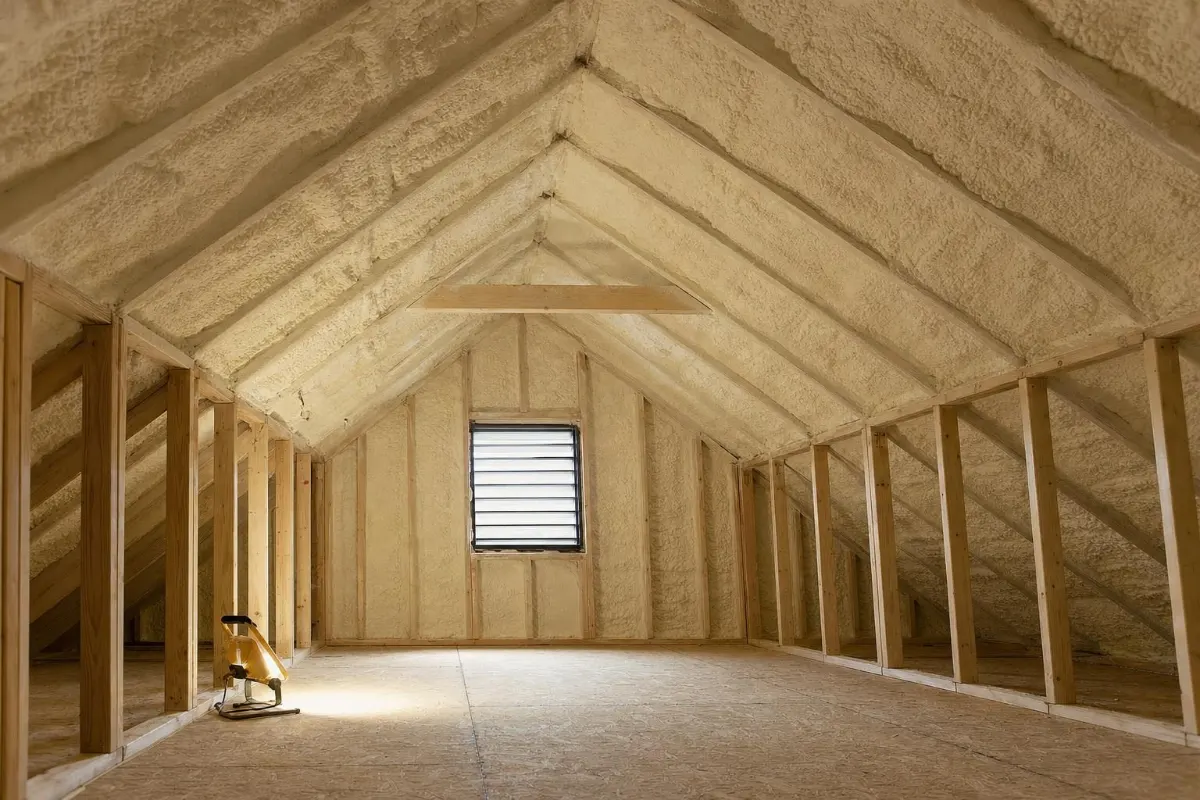
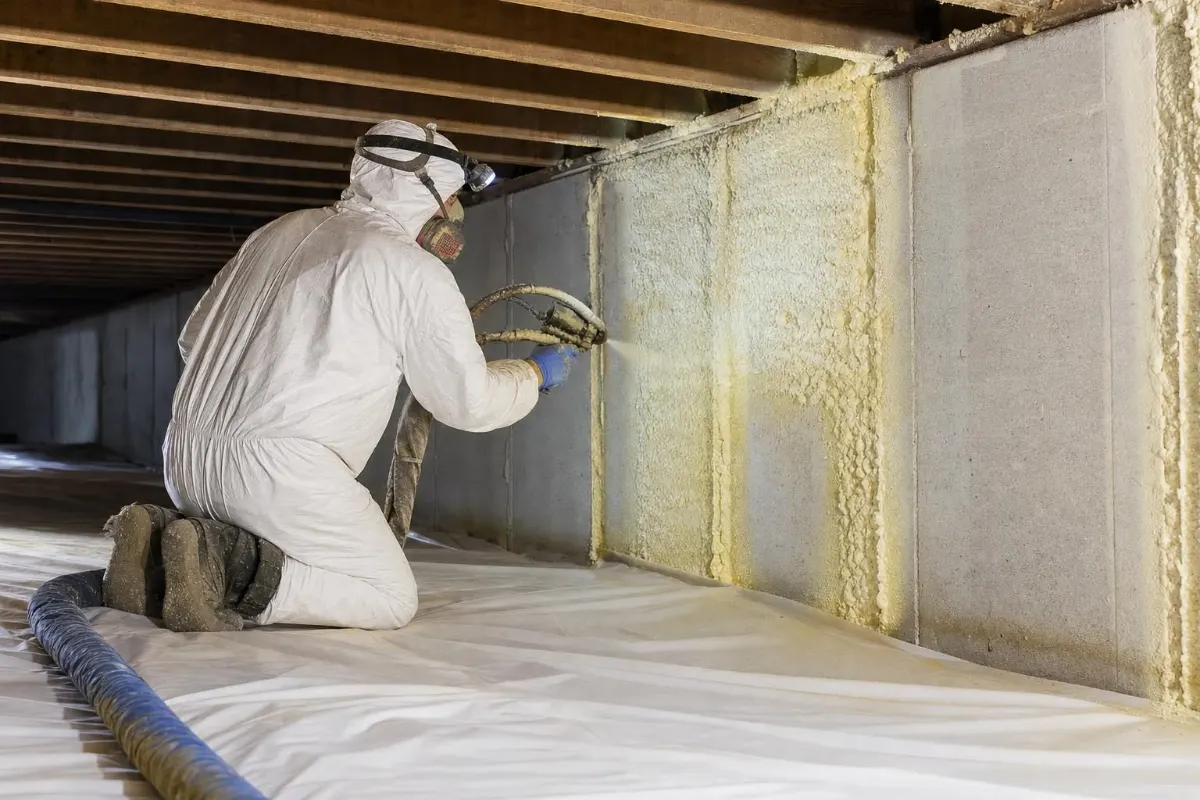
Closed-cell spray foam is the dense, rigid form of spray polyurethane foam. Once cured it adds a high R-value per inch, stops air movement and, at typical installed depths, slows water vapor too. That is why it shows up wherever space is tight or moisture is a concern: rim joists, crawl space walls, metal buildings, roof decks and walls with shallow framing.
In the Wet Mountain Valley the goal is usually simple. Stop the drafts, keep the heat you paid for, and keep condensation off cold surfaces. Closed-cell foam does all three in one layer.
At nearly 8,000 feet the air is dry most of the year, but the temperature swing between a sunny afternoon and a clear night can be huge. That swing is what drives condensation on cold surfaces: rim joists, foundation walls, metal panels and the underside of roof sheathing. Closed-cell foam is dense enough to keep warm, moist indoor air away from those cold surfaces, and it does not soak up water the way fiberglass can.
It also adds strength. Cured closed-cell foam is rigid and bonds to the framing and sheathing, which can stiffen walls and quiet metal panels in high wind. On a building that faces the open valley, that extra rigidity is a real benefit, not just a selling point.
Closed-cell foam is usually applied in layers, called lifts, rather than all at once, so the foam can cure properly and not overheat. A careful crew measures depth as it goes so you get the thickness listed in the quote. Ask how many inches are planned for each area and what R-value that gives.
When you collect more than one quote, line them up on the same terms: the foam product, the thickness in each area, the total square footage and whether any coating or covering is included. A quote that is far lower than the others often means thinner foam or fewer areas. The U.S. Department of Energy explains R-value and insulation types in its Energy Saver guide.
If you are not sure whether closed-cell or open-cell foam is right for a given area, ask the provider to walk you through the tradeoffs on site. Seeing the framing, the moisture conditions and how the space is used makes the choice much clearer than any general rule.
Closed-cell costs more per inch than open-cell, so it is used where its strengths matter.
A leading source of cold air leaks in homes of every age.
Foam on stem walls instead of batts hanging under the floor.
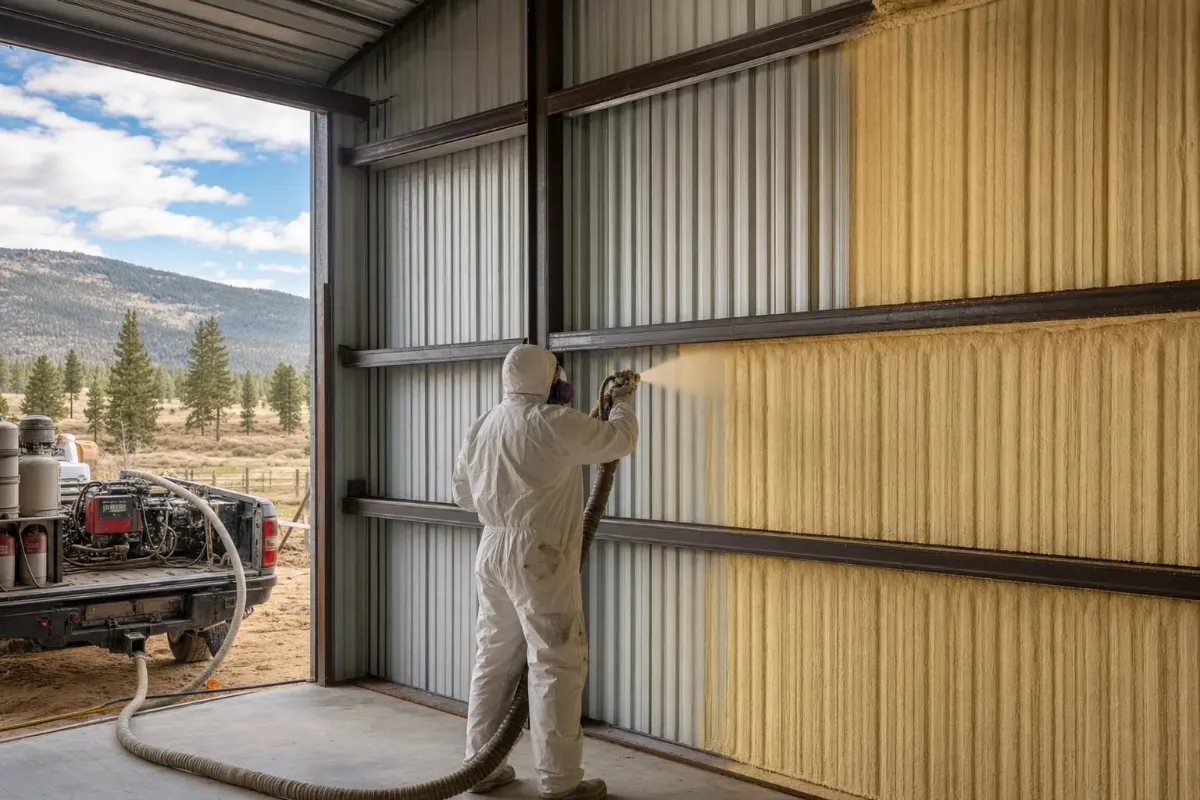
Foam on panels and purlins to cut condensation and drafts.
Where there is no attic to fill and depth is limited.
Air sealing, insulation and added rigidity in one step.
Closed-cell where it earns its cost, open-cell where it does not.
Plans account for cold surfaces and condensation common at altitude.
Ask how exposed foam will be covered or coated under code.
Ask about closed-cell foam for your walls, rim joists or shop.
Free — no obligations
House, addition, shop or barn, and whether it is new or existing.
Rough square footage or plans, and whether walls are open.
Your town or road, so travel and rig parking can be planned.
Check foam type, thickness and areas covered before you approve.
Closed-cell is denser, gives more R-value per inch and resists moisture. Open-cell is softer, costs less per inch and suits many interior walls and attics. Many projects use both.
At typical installed depths, closed-cell foam slows water vapor significantly. The provider should explain how that fits your wall or roof assembly.
Yes. Spraying closed-cell foam directly on steel is one of the most common ways to control condensation in metal buildings.
It depends on the area and the R-value you want. Walls, rim joists and roof decks often get different depths. Ask the provider to list the planned thickness for each area in the quote.